
RR Discussion 2
Taizo Yamamoto and Hamed Ghasemi
Published September 25, 2026
For the second installment of our YA Discussions series, Taizo Yamamoto of Yamamoto Architecture met with Hamed Ghasemi, to discuss their experience with RR Zones.
In this discussion they consider: How are policies including RR created and implemented? What are the tensions between guidelines and city-wide policy vs. neighbourhood character, and did this contribute to the failed adoption of the Villages Plan? What is the difference between Pre-zoning vs. Zoning to an established District Schedule? What are the limitations of Zoning Bylaws and Guidelines, and are we excluding innovative approaches through how our policies are written?
Find further insight into Hamed’s experience in the written interview below.
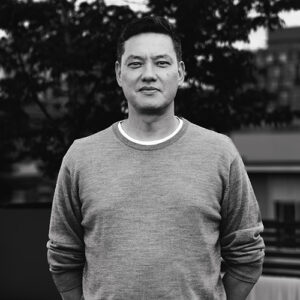
Taizo Yamamoto
Principal
Yamamoto Architecture

Hamed Ghasemi
Principal
HG Planning & Development
Can you tell us a bit about yourself and your experience within Planning and Policy development?
My academic background is in urban design, landscape urbanism and architecture. Professionally, I have worked on both the private and public sides, as an urban planner and designer with IBI Group, as a Development Planner with the City of Vancouver, and later as a Senior Development Planner with the City of North Vancouver. More recently, I started my own planning and development practice.
Most of my municipal experience has been on the implementation side of policy. Policy planners typically lead the preparation of new policies, while development planners work with those policies through actual applications. That implementation experience is valuable because once projects start coming through the system, you begin to see where a policy works well, where interpretation is needed, and where amendments or refinements may eventually be required.
In Vancouver, I worked with several evolving policy frameworks, including townhouses and rental apartment policies and Broadway Plan applications in areas such as Kingsway and Mount Pleasant.
Can you describe how new Policies are written, and then how projects are reviewed for compliance?
New housing policies are generally driven by identified housing needs, projected growth, market conditions, Council priorities and broader planning objectives, and their development has a complex process that may take a couple of years from initiation to Council approval. Policy development is usually multidisciplinary, iterative, and requires a large team of planners and engineers, including policy planning, development planning, social planning, economic development planning, landscape planning, transportation and infrastructure teams.
There are then multiple rounds of analysis and engagement with the public, industry, other levels of government, and affected stakeholders before a policy eventually reaches Council.
Once a new policy is approved by Council, it goes to the execution stage, which is the implementation process, where the policy gets tested against reality and words are transformed into real projects. That is when we begin to understand whether the policy is producing the intended outcomes.
Reviewing projects against a new policy depends on the rezoning path, whether it is a regular rezoning or expedited rezoning. When reviewing an application, I always used to establish the project’s foundation first to ensure the project is on the right path and expects no major change or redesign. The design team could then move into the detailed design phase.
How much consideration of pro-formas goes into the establishment of new Policy?
I wasn’t on the financial-analysis side of preparing the RR policy, so I wouldn’t want to characterize the City’s exact modelling. But financial feasibility is clearly an important part of successful policy development. A policy can have excellent planning objectives, but if the development it enables is not financially viable, it won’t deliver the intended outcome.
That is why feasibility and real estate studies, and industry engagement happen through the policy development process. The challenge is finding the right balance between project economics and all the other objectives the City is trying to achieve, such as affordability, family housing, sustainability, public realm, servicing and neighbourhood fit.
And feasibility shouldn’t only be tested when the policy is written. It needs to be monitored after implementation because construction costs, interest rates, rents and market conditions change. Regular monitoring and updates can extend the life of the policy and ensure it does not become outdated soon.
What drove the City to initiate these RR zones?
I wasn’t part of the RR policy team, so I can only speak from the public policy record and from what I saw during implementation.
The broader objective was to increase the supply and diversity of purpose-built rental housing, particularly medium-density missing middle, and enable quick delivery of rental housing to address the housing shortage. This was planned through a simple and compact form of development for buildings, reduced parking requirements, adjusted design details to reduce the cost, and an expedited rezoning process rather than CD-1.
Have they been successful in your opinion?
From the implementation side, I would say fundamentally yes, but not perfectly, and I wouldn’t expect a new policy to be perfect.
The success of the policy ultimately depends on whether it achieves its objectives and intended outcomes, which for RR Zones were a shorter review process through expedited rezoning, a compact building form, and quick delivery of rental housing. For conventional sites, it worked relatively well.
Where it became more interesting was on unusual sites such as exceptionally deep lots, irregularly shaped lots, or unique adjacencies. A standardized policy can’t anticipate every site condition. On some projects, I had to test alternative massing or design approaches to find a solution that still achieved the intent of the policy.
I also heard recurring industry concerns around issues such as upper-storey setbacks, building-wing dimensions, parking footprint, and water infiltration requirements. That was a signal that rebalancing of requirements may be needed along the process. Like any other policy, RR zones needed implementation adjustments and require monitoring, maintenance, and improvements as we learn more and see more of these projects in the city.
Where have you seen the benefits from this form of Rezoning compared to a CD-1?
The expedited rezoning process created an extensive pre-development engagement between applicants and staff and enabled us to review most of the upcoming Development Permit applications while rezoning was progressing. During this time, we could identify the trending issues, concerns, and non-compliance items between multiple applications and take any necessary actions on required policy amendments before projects get to the development permit stage. Also, expedited rezoning time enabled us to lay down the foundation of projects to create a smooth development process.
However, compared to the comprehensive development rezoning process (CD-1), a standardized zone inevitably has less ability than a CD-1 to respond to unusual sites. So, there is a balance between predictability and site-specific flexibility. There were a few projects that we had to send through a CD-1 process due to a lack of flexibility in the expedited rezoning process.
What would you see as benefits/drawbacks of pre-zoning, especially in light of the new Vancouver Villages Plan?
The benefit of pre-zoning is generally reduced uncertainty, as we have some assumptions of the outcome, a shorter rezoning process, reduced application cost, quicker delivery of housing, especially during uncertain financial conditions, and the initial comprehensive public engagement.
The main drawback of pre-rezoning is limited flexibility and expected outcome, which may have impacts on project risk and entitlement, implementation, and public feedback. The drawbacks depend on when the pre-zoning is happening and the size of the area it covers. For example, has the policy proven to be successful and accepted by stakeholders, or is it just at the initial testing process? The latter will have significant challenges, including neighbourhood character. The same applies to the size of area the policy covers. The larger and more diverse the area being pre-zoned, the more difficult it becomes for a standardized framework to anticipate every site condition and development scenario.
Can you describe the trend from more prescriptive to more flexible built form regulations?
I always believe the more we write, the more problems we will have and the longer the process will be. Every number in the bylaws and guidelines has history, objectives, and intent. The problem arises when compliance with the number becomes more important than achieving the reason it was created. My preference is to enforce values first, then recommend numbers.
That doesn’t mean removing standards altogether. Some regulations need certainty. But where professional judgment can produce an equal or better outcome, guidelines should allow that conversation.
The challenge is that flexible regulation places greater responsibility on everyone involved. Applicants need to explain their rationale well, and reviewers need to exercise judgment consistently. Flexible guidelines only make approvals faster if the implementation culture supports flexibility and fosters a collaborative approach.
Do you see opportunities to further streamline the approvals process?
Absolutely. But streamlining shouldn’t simply mean doing the same review faster. It is a shared responsibility, and we should ask which decisions actually need to occur at each stage and what the responsibilities of everyone sitting around the discussion table are.
On the municipal side, one of the biggest issues I saw with streamlined rezonings was servicing and infrastructure. Streamlined rezoning is required largely to resolve engineering agreements or upgrades; there may be an opportunity to move some of those matters to the DP or subsequent permitting stage. That can save 8-12 months of processing time.
On the applicant side, early coordination and proactive engagement are equally important. That can save a significant amount of time during the application process and avoid redesign at later stages.
And on the consultant side, applications need to be site-specific. Simply demonstrating compliance with every policy sentence does not necessarily create a good or easily reviewable application.
Ultimately, the biggest opportunity is clarity about what needs to be resolved when. We should not ask for detailed design while fundamental planning issues remain unresolved, and don’t hold up an entitlement decision for matters that can reasonably be dealt with later.
A lot of policies are written based on a fairly subjective and Western sense of what is “livable”, do you think these values should be preserved through policy?
If they are values, then yes, we need to preserve them and comply with them. But if they are cultural preferences, then we need to provide options in the market. That is why I think we need to distinguish between fundamental health and wellbeing outcomes and cultural preferences about how people live.
Access to daylight, ventilation, safety, privacy, spatial functionality and opportunities for social interaction are legitimate planning concerns. Every project needs to meet the basics.
Planning history has shown us that poor housing and urban design decisions can have significant long-term health and wellbeing consequences. We should not repeat those mistakes and provide high-quality housing for everyone.
I think liveability is a topic that needs to be customized by region, city, neighbourhood, and sometimes by site, depending on context specifications. To me, that is another argument for performance-based planning: define the outcome we are protecting without unnecessarily prescribing one cultural model of housing.
Or do you think there should be more opportunities for different forms of housing (unit sizes, building depths, requirements for balconies, access to daylight for all rooms)
Yes, there should be more housing opportunities, and housing should respond much more directly to its intended users.
I think we can divide this subject into two distinct areas: City Planning Vs Architectural Planning.
City Planning has an important role in protecting public-interest outcomes, building relationships, shadowing, public realm, privacy, servicing, neighbourhood impacts, and broader livable cities.
But once we move inside the building, there should be greater room for architectural responses to different populations. Student housing, seniors housing, short-term and long-term rentals, family housing and smaller units don’t necessarily need identical assumptions about unit size, balconies, amenity space or internal configuration.
The key question shouldn’t always be, “Does this look like conventional housing?”
It should be, “Does this work well for the people who will actually live here, while meeting the broader public-interest objectives?” That’s where good urban design can bridge planning and architecture.
What would be the “worst case” outcome for a project developed with minimal guidelines?
The worst case isn’t simply an unattractive building. It’s a project that technically complies with zoning but creates poor living conditions, weakens the public realm, creates unnecessary impacts on neighbours, and doesn’t contribute positively to its context.
But the answer isn’t necessarily a 100-page guideline.
Quality matters more than quantity. A concise guideline that clearly establishes the important principles can be more effective than a very prescriptive document containing dozens of requirements that may conflict or encourage box-checking.
Minimal regulation works best when it is supported by strong professional judgment, good applicants and a collaborative review culture.
If policies and guidelines become less prescriptive and more hands-off, how do we ensure that new buildings are of quality and good contributors to neighbourhoods?
By pursuing values and best practices rather than just numbers.
Whether guidelines exist or not, flexible or prescriptive, it is ultimately the process that defines whether a project is thoughtful and well designed or not. In fact, if we provide more flexibility, applicants will have a greater responsibility to explain why their design is appropriate.
A strong application should be able to demonstrate the relationship between the site, context, end users, public realm, respond to relevant feedback, document major design moves, and ultimately explain how the building was formed and how it performs within its context. That rationale then gives staff something meaningful to evaluate rather than simply checking whether every numerical guideline has been satisfied.
I’ve always been cautious of the explanation, “we did it because the guidelines said so.” Guidelines are a starting framework. Implementation requires customization.
So if regulations become more flexible, quality control shifts from numerical compliance toward clear objectives, strong design rationale, professional accountability, and expert judgment review.
Now that you are in private practice, where do you see opportunities to improve policy and ultimately the public realm?
The main opportunity for policy improvement is through policy resilience. A resilient policy should be able to produce its intended outcome during various market conditions. This can happen through regular maintenance and updates to ensure the policy meets its objectives and reflects the up-to-date market conditions.
I also think there is an opportunity to focus more on outcomes and less on accumulated requirements. Over time, as the city is developed further and context becomes more complex, policies and guidelines tend to grow as new concerns are added, but very little is ever removed. Periodic policy maintenance should ask not only what else should we regulate? but also what no longer needs to be regulated?
Ultimately, the public realm benefits when good projects are easier to deliver. Faster approvals alone won’t create better cities, and better design standards alone won’t create housing if projects aren’t viable. We need to connect planning quality, feasibility, and implementation rather than treating them as separate conversations.